
Drs. Barry and Bobbi Coller Rare Book Room
New York Academy of Medicine-New York, NY
(New York Academy of Medicine, n.d.)
(New York Academy of Medicine, n.d.)
Part I: The Basics
The target audience for this bibliographic pathfinder is for advanced high school (or equivalent) and above. The resources provided will be more allied for college undergrads majoring in any art or science discipline, mainly history and healthcare. This will also be of interest to masters and PhD students due to the scarcity of comprehensive lists of medical/healthcare history archives/libraries/repositories. I also pray this amalgamation of bibliographic knowledge may be of assistance to alchemists and naturopathic physicians, two lifestyle occupations that transmute our current world population into a harmonious golden age of empowered individuals.
The content of the bibliographic pathfinder includes: dense medical reference books, professional medical and library journals, and website databases that have collections which span and record the time of humankind.
Part II: Written Resources
Reference Books

(Amazon, 2013)
A Dictionary of the History of Medicine by Anton
Sebastian is a comprehensive resource book when concerning this particular component
of history. Containing exquisite
illustrations to round out and break up the monumental amount of information
inherent within the double-column text pages, this book can be purchased for a
seemingly stealing amount on any number of websites (used on Amazon.com for
$9.49 and similar prices on Ebay.com) The subject of the book that concerns
history of medicine repositories, both past and present, that house(d) medical
archives, is included within this text.
Since this is not the main focus of the book, there are many omitted
entries of world class repositories. It
was published in 1999 by a British physician and collector of rare medical
books. It is almost 800 pages and was tackled by Dr. Sebastian due to the lack
of one single volume addressing medical history. This book, although receiving vitriolic
reviews for reasons of inaccuracies, is still a starting point for those
researchers looking for medical history repositories.
Amazon. (2013). A dictionary of the history of medicine.
Retrieved from Amazon website: http://www.amazon.com/gp/product/1850700214
Sebastian, A. (1999). A dictionary of the history of medicine. New York: Parthenon Pub. Group.
$$$$$$$$$$$$$$$$$$$$$$$$$$$$$$$$$$$$$$$$$$$$$$$$$$$$$$$$$$$$$$$$$$$$$$$$$$$

(Barnes and Noble, 2013)
The Companion Encyclopedia of the History of Medicine edited by W. F. Bynum and Roy Porter is a curious accumulation of essays that covers the gamut of this specialized multi-disciplinary subject. This two-volume set is scholarly, expensive and comprehensive; negotiating its pages must be done through an index, as the table of contents represents broad swaths of medicine’s history, including repositories of such knowledge. From a traditional standpoint, this encyclopedia contains the in-depth information one is expecting to see, yet access is limited due to the essay style format of the book. Seventy-two articles, written by almost as many esteemed professionals, contributed to this work, which was published in 1993. Spread throughout these volumes is information regarding medical repositories of past and present, yet no specific library or archive is made known in the table of contents. Each submission is accompanied by extensive endnotes and materials for further reading.
Barnes and Noble. (2013). Companion encyclopedia of the
history of medicine. Retrieved from Barnes and Noble website: http://www.barnesandnoble.com/w/companion-encyclopedia-of-the-history-of-medicine-w-f-bynum/1111753478?ean=9781136110443
Bynum, W. F., Bynum, W. F., Porter, R., & Porter, R.
(1993). Companion encyclopedia of the history of medicine. London: Routledge.
Journal Articles

Healing Temple on Island of Cos-Home of Hippocrates, Father of Western Medicine
The History of Medical
Libraries from 2000 B.C. to 1900 A.D. by Kathleen P. Birchette from the
July 1973 edition of the Bulletin of the Medical Library Association is a
timeless and novel article. Beginning
with the Royal Library of Assurbanipal of the Assyrian Empire and Hammurabi’s
Code of Babylon, Birchette moves up through Medieval Europe and Arabia and ends
up with the founding of the Medical Library Association as a resolution of the
American Medical Association. Even
though it is now 40 years old, it still retains much information that cannot be
gleaned from any other single source.
Truly, it is a remarkable journal article tucked away in our midst. The
Library at Alexandria is emphasized at length, focusing on the medical
component of the school that existed in tandem with it. Medical libraries in the U. S. discusses the
evolution of these institutions, including where collections were merged and
what currently exists including the impressive New York Academy of Medicine
Library.(Caton, 1906)
Birchette, K. (1973). The history of medical libraries from
2000 b.c. to 1900 a.d. Bulletin of the Medical Library Association,
61(3), 302-308. Retrieved from http://www.ncbi.nlm.nih.gov/pmc/articles/PMC198686/
###########################################################################

Healing Wisdom Etched Into the Walls as Serpents Signify Immortality
(Caton, 1906)
Hippocrates and the Newly-Discovered Health Temple of Cos by Richard Caton from the March 10, 1906 edition of The British Medical Journal is an inspirational glimpse at what medical history repositories were like during the time of Hippocrates, "The Father of Modern Western Medicine". This century-old article maintains the vibrancy of those patrons of Hippocrates’ health temple. Describing the layout from archaeological excavations, Caton explores and records the microcosm of this healing center, along with the inhabitants’ principles and practices so important for our society to remember today, over 2500 years later. Catron describes the individual structures of the campus, including the library and the walls that were inscribed with medical knowledge, empowering information. This article shows how a healing center can accumulate medical wisdom from past and present, which, then, by its very nature, becomes a historic repository. As Caton specifies the functions of the different buildings, he illustrates the different holistic healing modalities that can be tied to any number of medical history repositories/learning centers from the ancient world, which remain spread throughout the globe today.
Caton, R. (1906). Hippocrates and the
newly-discovered health temple of cos. The
British Medical Journal, 1 (2358), 571-574. Retrieved from http://www.ncbi.nlm.nih.gov/pmc/articles/PMC2380832/
#########################################################################

Osler Library Reading Room
(McGill University, 2013)
(McGill University, 2013)
Sir William Osler, The
Bibliotheca Osleriana and the Creation of a History of Medicine Collection by
Peter McNally, Glenn Brown and Nicolas Savard in the June 2007 edition of
Library History (now Library & Information History) is a descriptive analysis
of how a successful contemporary medical history repository has evolved over
the past 90 years, since its establishment.
Osler, a highly successful physician and bibliophile, began to accumulate
and catalog materials for his collegiate donation well before his death, so, as
this article shows, we have detailed notes elucidating the rationale of this ‘Renaissance
mans’ theories and practices. The
authors state that there are four questions addressed of great collections: 1) ‘What
is collected?’ 2) ‘Why is it collected?’
3) ‘What are the nature & significance of the collections?’ 4) ‘How is
access provided to the items in the collection?’ This medical history repository has been
troubled with cataloging issues since its progenitor perished, but today, its specialty
niche is utilized by society, being a great boon for Osler’s Alma Mater, McGill
University, Montreal, Canada.
McGill
University. (2013). Bibliotheca osleriana. Retrieved from McGill website: http://aoc.mcgill.ca/give/ways-give/annual-giving/newsletter/student-experience
McNally, P. F., Brown, G. &
Savard, N. (2007). Sir william osler, the bibliotheca osleriana and
the creation of a history of medicine collection. Library History, 23 (2), 97-114.
doi:10.1179/174581607x205635
'Osler Library of the History of Medicine, McGill University'
MacDowell, R. (Producer). (2013, February 28). Osler Library of History of Medicine, McGill
University [Video podcast]. Retrieved from the McGill University, Montreal,
Quebec, Canada website: http://www.yowatch?v=jm817yZerosutube.com/
Part III: Online Resources
Websites
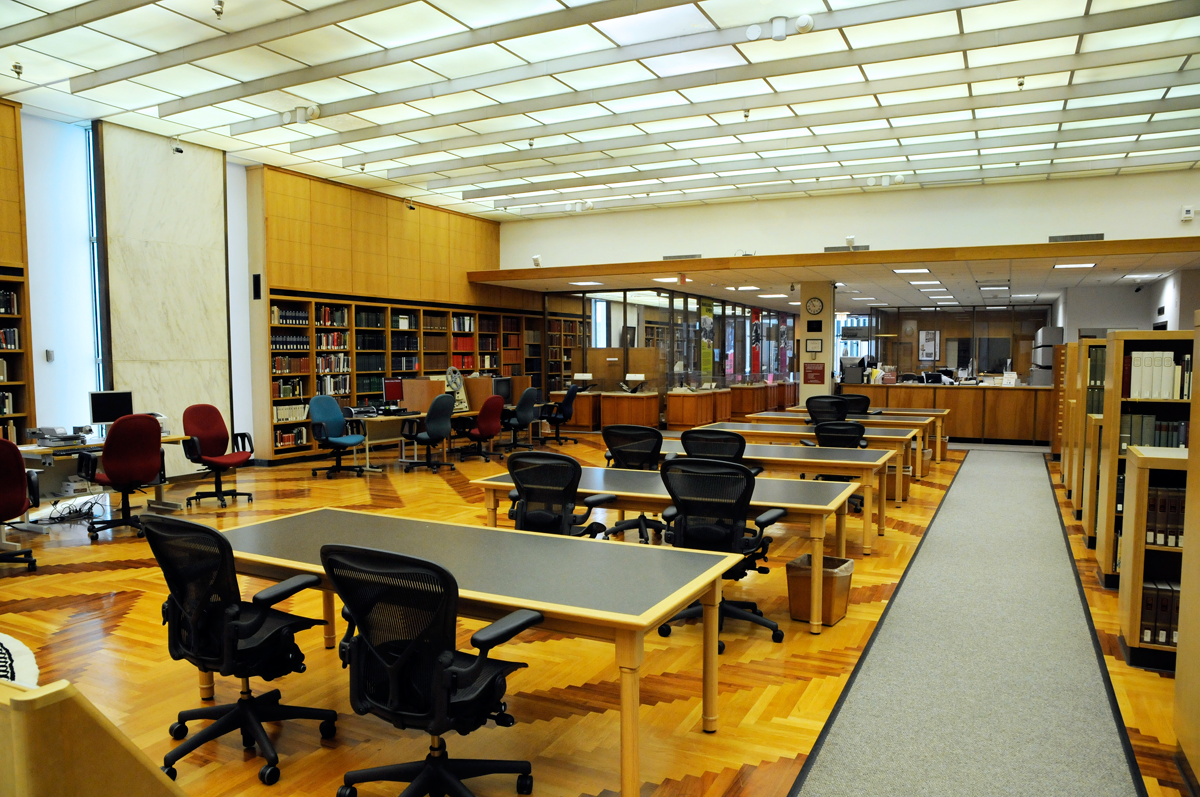
U.S. National Library of Medicine's History of Medicine Reading Room
(National Library of Medicine History of Medicine Division [NLM-HMD], 2013)
The History of Medicine Division of the U.S. National
Library of Medicine (NLM), which is part of the National Institute of Health
(NIH), has the most comprehensive list of internet links to a worldwide listing
of History of Medicine Collections (NLM-HMD, 2013).
Over 200 specific collections are
represented in the majority of the U.S. states and 20 other countries located
on every continent, save Antarctica. According
to their website, “The NLM’s History of Medicine Division collects, preserves,
makes available, and interprets for diverse audiences one of the world's
richest collections of historical material related to human health and disease.”
(NLM-HMD, 2013) The history of this vast
historical collection dates back to 1818 C.E., yet its holdings date as far
back as the 11th Century. Collections
include digitized material, printed works, audiovisuals, Medical Library
Association and American College of Nurse-Midwives organizational archives,
prints and photographs. A free downloadable
copy of NLM’s Digital Collections’ book, Hidden Treasure, a work
exemplifying the division’s historic holdings, can be accessed by anyone
interested at: http://collections.nlm.nih.gov/ext/pub/HIDDENTREASURE_NLM_BlastBooks.pdf (NLM-HMD, 2013).
National Library
of Medicine History of Medicine Division. (2013). Home; reading room; links;
about us. Retrieved from NLM-HMD website: http://www.nlm.nih.gov/hmd/
*********************************************************************************************

Masthead for the History of Health Sciences Bi-Yearly Newsletter
(Medical Library Association History of the Health Sciences Section [MLA-HHSS], 2013)
The History of the Health Sciences Section of the Medical
Library Association has a staggering amount of links to health science related
history. (MLA-HHSS, 2013) These links are accessed by way of 15
categories, including ‘History of the Health Sciences Libraries and Archives’, ‘Organizations
and Museums with History of the Health Sciences Interests’, ‘Databases’, ‘Oaths,
Prayers and Symbols’, ‘Bibliographies/Chronologies/Histories’,
‘Listservs’, ‘Journals’, etc. The
accompanying sub-categories are arranged in alphabetical order, yet have the
potential to overwhelm the user with its vast array of links with no geographical
or further subject-based break down distinction. According to the website, “The purpose of the
section is to stimulate and support interest in the history of the health
sciences among libraries and librarians” and “was organized in 1966 at the
Medical Library Association’s 65th annual meeting.” (MLA-HHSS, 2013) Interested parties wishing to join the
History of the Health Sciences Section must be members of the Medical Library
Association and fill out an application at http://www.mla-hhss.org/manuals/HHS2013.pdf (MLA, 2013)
Medical Library Association History of the Health Sciences Section. (2013). Home; purpose; links,
incipit. Retrieved from MLA’s HHSS website: http://www.mla-hhss.org/
********************************************************************************************

Cell Division Chart from 1906
(Medical Heritage Library [MHL], n.d.)
The Medical Heritage Library is a digital archive which pools the resources of “some of the world’s leading medical libraries, promotes free and open access to quality historical resources in medicine.” (MHL, n.d.) The contributing institutions are a ‘who’s who’ of medical history repositories, all of whose links are easily accessible from this website under ‘about’. “The MHL’s growing collection of digitized medical rare books, pamphlets, journals, and films number in the tens of thousands, with representative works from each of the past six centuries, all of which are available here through the Internet Archive.” (MHL, n.d.) “The Medical Heritage Library was initiated by the Open Knowledge Commons, which was awarded $1.5 million dollars in start-up funding from the Alfred P. Sloan Foundation to begin digitization at partner libraries.” (MHL, n.d.) Funding support also comes from the Alfred P. Sloan Foundation, Council on Library and information Resources and the National Endowment for the Humanities. This collaboration of the Medical Heritage Library is part of the larger Internet Archive non-profit internet library based in San Francisco. (Internet Library, 2001)
Internet Archive.
(2001, March 10). Medical heritage library. Retrieved
from Internet Archive website: https://archive.org/
Medical Heritage Library.
(n.d.). Home; about; content. Retrieved from MHL website: http://www.medicalheritage.org/
********************************************************************************************

Core Concerns and Major Stakeholders --
New York Academy of Medicine
(NYAM, n.d.)
The New York Academy of Medicine (NYAM) is a center of
learning that focuses on the health concerns of urban populations. Located in New York City, one of the most
concentrated metropolitan areas in the world, this independent organization,
founded in 1847, has maintained four core concerns: 1) Disparities; 2) Healthy
Aging; 3) Heritage; and, 4) Prevention. (New York Academy of Medicine [NYAM], n.d.)
In addition, their website describes the institution as addressing “the health challenges facing the world's
urban populations through interdisciplinary approaches to policy leadership, innovative
research, evaluation, education, and community engagement.” (NYAM, n.d.) NYAM's library is a
vital component to the organization, having a fully searchable collections catalogue
and tutorials for a host of online resources, including databases, as well as
offering corporate research services. The
NYAM’s ‘recommended resources’ are a tidy categorization of eight subjects,
including ‘history of medicine’ and ‘hospitals
and doctors’ which lead the user to many different links to other online
medical history repositories. (NYAM, n.d.)
The New York
Academy of Medicine. (n.d.). Home; about us; recommended resources. Retrieved
from NYAM website: http://www.nyam.org/
********************************************************************************************

German
Pharmacy Museum - Heidelberg Castle, Germany
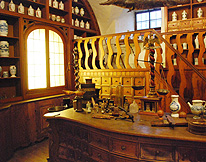
(Bargain Travel Europe, 2013)
The Statement of Purpose of the Medical Museums Association
(MMA) states that it “was created to promote long term contacts among
individuals, institutions, and organizations involved in collecting historical
artifacts and objects of interest to the health sciences.” (Medical Museums Association [MMA], 2011)
The web site, hosted by Dittrick Medical
History Center and Case Western Reserve University, has an impressive list of ‘related
links’, divided into five categories. These
divisions are ‘Medical museums, archives and libraries in the USA’, ‘Medical
societies, associations, organizations’, ‘Thematic Virtual Museums’, ‘Medical
museums outside the USA’, and ‘Collecting medical antiques: dealers and others
sources of information’ (MMA, 2011). All of these categories lead to alphabetical
lists of links. The MMA has a sister organization
called the European Association of the Museums of History of Medical Science (E.A.M.H.M.S.) (E.A.M.H.M.S., 2005). The two groups work toward the similar goal
of creating a supporting network environment for repositories of medical
history. Membership for either
organization can be attained by referring to the following link: http://www.cwru.edu/affil/MeMA/pdfs/MeMA-membership-web-2013.pdf (MMA, 2011).
Bargain Travel
Europe: Guide to Europe Destinations on a Budget. (2013). German pharmacy museum
– heidelberg castle: from alchemy to the apothecary. Retrieved from Bargain
Travel Europe website: http://www.bargaintraveleurope.com/
European
Association of the Museums of History of Medical Sciences (E.A.M.H.M.S.).
(2005). Introduction. Retrieved from E.A.M.H.M.S. website: http://www.aemhsm.net/uk/introduction.htm
Medical Museums
Association. (2011). Purpose; links. Retrieved from MMA’s website: The Medical
Museums Association's website information was retrieved from: http://www.cwru.edu/affil/MeMA/memahome.htm
Part IV: Summary

Medieval European alchemical principles manifested in tangible modern museum holdings. (Martinon-Torres, 2003)
In the chapter focusing on ‘Health, Law, and Business’, Reference and Information Services in the 21st Century: An Introduction states “The days of the family doctor who made house calls sounds like a long-forgotten myth in today’s frenetic world of specialists and insurance-sensitive health systems. For better or for worse, consumer empowerment in health decisions is the order of the day and replaces the old unthinking reliance on the family doctor. Given this climate of empowerment, both the demand for and the supply of health information have reached epic proportions.” (Cassell, 2011) In the later chapter on ‘When and How to Use the Internet as a Reference Tool’, under the sub-heading of ‘Spotty Coverage of Historical Material’, the text is as follows: “The presence of historical material on the Internet is relatively limited. Even databases usually do not go far back into archival material so that journal articles prior to the 1980s are hard to find via the Internet. If included, historical coverage tends to be spotty, almost as if it is included only if and when time and personal interest permit such inclusions. With digital initiatives like American Memory, Yale University’s Avalon Project, Gallica from the National Library of France, and the University of Michigan’s Making of America, the information drought on historical material may be lessening.” (Cassell, 2011)
The
over 1.5 million user digital archive collaborative Internet Archive, “a 501(c)(3)
non-profit that was founded to build an Internet library” (Internet Archive [IA], 2001) is mentioned
by Cassel and Hiremath as containing “a storehouse of 150 billion pages of dead
Web sites and extinct pages.” (Cassell, 2011).
This very blog may end up being preserved through Internet Archive when all other traces of it have vanished. The ‘Internet Archive’s rationale for building an “Internet Library” is
thus:
Libraries
exist to preserve society's cultural artifacts and to provide access to them.
If libraries are to continue to foster education and scholarship in this era of
digital technology, it's essential for them to extend those functions into the
digital world.
Many
early movies were recycled to recover the silver in the film. The Library of
Alexandria - an ancient center of learning containing a copy of every book in
the world - was eventually burned to the ground. Even now, at the turn of the
21st century, no comprehensive archives of television or radio programs exist.
But
without cultural artifacts, civilization has no memory and no mechanism to
learn from its successes and failures. And paradoxically, with the explosion of
the Internet, we live in what Danny Hillis has referred to as our "digital
dark age."
The
Internet Archive is working to prevent the Internet - a new medium with major
historical significance - and other "born-digital" materials from
disappearing into the past. Collaborating with institutions including the
Library of Congress and the Smithsonian, we are working to preserve a record
for generations to come. (IA, 2001)
I chose this subject for threefold reasons.
First, to create a foundation on which I can do further research, and
after realizing from delving, possibly create a travel guide for tourists/scholars
who seek medical history repositories, due to lack of one existing, or at least
eluding my initial plow through the Internet.
Secondly, the history of medicine is intertwined, as the caduceus, with
alchemy, a powerful life passion of mine, connecting known and unknown, myth
and reality, religion and rationale, I am able to integrate many of my life
experiences and interests into a cohesive manifestation, this project being one
of them. Thirdly, as library and
information professionals in our society, we must emulate Internet Archive, as
well as, the American Medical Association’s Historical Archives, which function,
as “the memory of the AMA” (American Medical Association, 2013).
We must therefore, in a grander scheme,
preserve for retrieval, the accomplishments and failures of both our age and of
ages past; In a more distilled vision,
there is no better realm for posterity as the field of medicine. This is the health of the individual and the
group, therefore the perpetuity of a vibrant quality of life. The past century has led to many advancements
in the medical field, much to the detriment of the past millennia’s tried and
true healing methods, now known as ‘complimentary medicine’. Our Information Age is allowing for a
quickening of the coalescence and dissemination of these ancient healthcare
arts, so many of which reside, side by side, with the Allopathic dead ends that
petered out in the 19th through 21st centuries. All added up, my love for the past, present
and future generations inspired my reasoning for selecting medical history
repositories for my bibliographic pathfinder project.
American Medical
Association. (2013). AMA Historical Archives. Retrieved from AMA website: http://www.ama-assn.org/ama/pub/about-ama/our-history/ama-historical-archives.page
Cassell, K. A.,
& Hiremath, U. (2011). Reference and information services in the 21st
century: an introduction (2nd ed.). New York: Neal-Schuman Publishers.
Internet Archive.
(2001, March 10). Why the archive is building an ‘internet library’. Retrieved
from Internet Archive website: https://archive.org/about/
Martinon-Torres,
M., Rehren, T., & von Osten, S. (2003, December). A 16th century
lab in a 21st century lab: archaeometric study of the laboratory
equipment from oberstockstall (kirchberg am wagram, austria). Antiquity, 77
(298). Retrieved from Antiquity website: http://antiquity.ac.uk/projgall/martinon/

No comments:
Post a Comment